A ground fault occurs when a current-carrying conductor comes in contact with ground. A faulty appliance or the presence of water in contact with a conductor are two possible ways a ground fault can occur. One way ground fault protection is accomplished is by the use of GFCI receptacles. These are installed in place of a normal receptacle.
A ground fault circuit interrupter (GFCI) compares current on the hot wire with current returning on the neutral wire. Under normal circumstances the current is equal.
When a ground fault occurs some of the current will return to the source through ground. In the following illustration, for example, a ground fault has occurred in a common household appliance. Anyone coming in contact with the appliance will become part of the circuit. The sensing and test circuit will detect that the amount of current returning on the neutral is less than the current on the hot wire. The sensing and test circuit will cause the trip coil to automatically open the circuit breaker, removing power from the appliance. GFCI devices trip between 4 to 6 milliamps. The amount of time it takes for a GFCI device to trip depends on the current. The higher the current the faster the device will trip.
Circuits providing power to certain areas of the home require ground fault circuit interrupters (GFCI).
Ground fault protection is required on the following circuits:
Bathroom receptacles,Residential garage receptacles,Outdoor receptacles,Receptacles in unfinished basements,Receptacles in crawl spaces,Receptacles within six feet of a kitchen or bar sink,Pools.
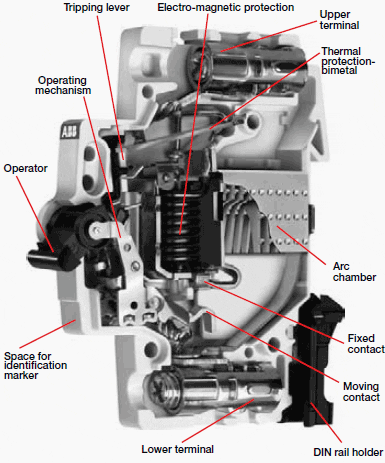
GFCI type circuit breakers have one white neutral lead which is connected to the neutral bus in the load center. The phase and load neutral are connected to lugs in the GFCI. They mount in the load center in the same way as a standard circuit breaker.
A ground fault circuit interrupter (GFCI) compares current on the hot wire with current returning on the neutral wire. Under normal circumstances the current is equal.
When a ground fault occurs some of the current will return to the source through ground. In the following illustration, for example, a ground fault has occurred in a common household appliance. Anyone coming in contact with the appliance will become part of the circuit. The sensing and test circuit will detect that the amount of current returning on the neutral is less than the current on the hot wire. The sensing and test circuit will cause the trip coil to automatically open the circuit breaker, removing power from the appliance. GFCI devices trip between 4 to 6 milliamps. The amount of time it takes for a GFCI device to trip depends on the current. The higher the current the faster the device will trip.
Circuits providing power to certain areas of the home require ground fault circuit interrupters (GFCI).
Ground fault protection is required on the following circuits:
Bathroom receptacles,Residential garage receptacles,Outdoor receptacles,Receptacles in unfinished basements,Receptacles in crawl spaces,Receptacles within six feet of a kitchen or bar sink,Pools.
GFCI type circuit breakers have one white neutral lead which is connected to the neutral bus in the load center. The phase and load neutral are connected to lugs in the GFCI. They mount in the load center in the same way as a standard circuit breaker.